
In short: HECS supplies factory-built FRP packaged sewage treatment plants (STPs) for sites across Kerala, from about 1 to 1,000 KLD. Each plant is sized on your daily sewage flow, installed above or below ground, and designed to meet the outlet limits in your Kerala State Pollution Control Board consent. In Wayanad, a HECS 50 KLD Ultima+ smart STP treats sewage for the Lords 83 resort.

Smart STP at Lords 83, Wayanad
Packaged STP range
Ground installation options
HECS SmartHub alerts
Who needs an STP in Kerala
Under the environmental conditions for building bye-laws that MoEFCC notified on 9 December 2016, the size of the building decides what is required:
- 5,000 to 20,000 sq m built-up area: on-site sewage treatment where there is no municipal sewer, with treated water reused as far as possible.
- 20,000 sq m and more: an on-site STP that treats 100% of the wastewater, with treated water reused on site for landscaping, flushing and cooling towers.
The Kerala State Pollution Control Board gives the Consent to Establish and Consent to Operate for the plant and sets its outlet limits, and your local body may add its own conditions. Typical Kerala sites include resorts and homestays, hospitals, apartments and villas, schools and colleges with hostels, and factories with staff sewage. Read more in our Kerala State PCB STP guidelines and is an STP mandatory?.
Why packaged STPs suit Kerala sites
- Heavy monsoon and high groundwater: FRP tanks are sealed units, and below-ground units are anchored for the groundwater level on site.
- Hill, backwater and coastal sites: factory-built modules need far less civil work than a concrete plant, which helps where access and space are tight.
- Seasonal occupancy: resorts swing between full and quiet weeks. An equalisation tank and MBBR biology handle these load swings.
- Reuse: treated water can go back to gardens, flushing and cooling, which cuts tanker and borewell use.
- Remote sites: HECS SmartHub sends alerts and lets the maintenance team check the plant without a site visit.

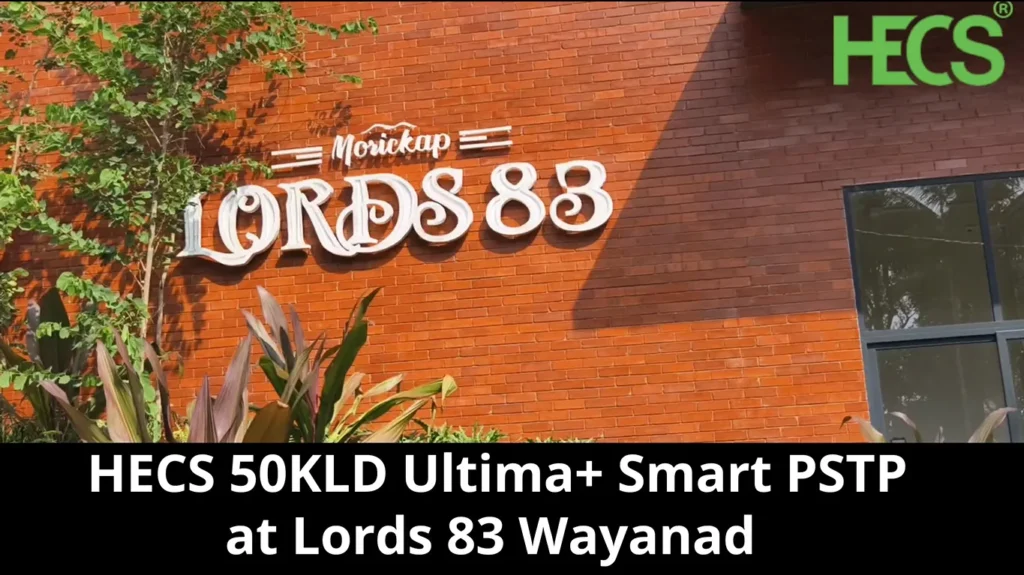
Case: 50 KLD smart STP at Lords 83, Wayanad
Lords 83 is a resort in Wayanad. HECS installed a 50 KLD HECS Ultima+ smart packaged STP with anaerobic and aerobic (MBBR) treatment stages, ultrafiltration for the treated water, and HECS SmartHub for real-time data, alerts and daily, weekly and monthly dashboards.
- Challenge: stable treatment through seasonal changes in occupancy, with less manual work and lower power use.
- Reuse: treated water is used for gardening, pathways and toilet flushing.
- Result: less manual checking, lower freshwater use, and remote supervision by the maintenance team, who report that maintenance effort has dropped.
Choose the technology
| HECS Ultima (MBBR) | HECS Amaze (MBR) | |
|---|---|---|
| Best for | Resorts, apartments, schools, offices and factory sewage with typical discharge or garden reuse | Sites that reuse water for flushing or cooling, have strict outlet limits or very little space |
| Treated water | Meets typical discharge limits with filtration and disinfection | Designed for BOD and TSS below 5 mg/l |
| Running the plant | Typically 1–2 hours of attention a week at small and mid capacities; runs below 50 dB | Membranes need regular cleaning and eventual replacement |
| Installation | Above or below ground; a unit installs in about two days | Above or below ground |
See HECS Ultima, HECS Amaze and our guide MBBR vs MBR vs SBR.
HECS in Kerala
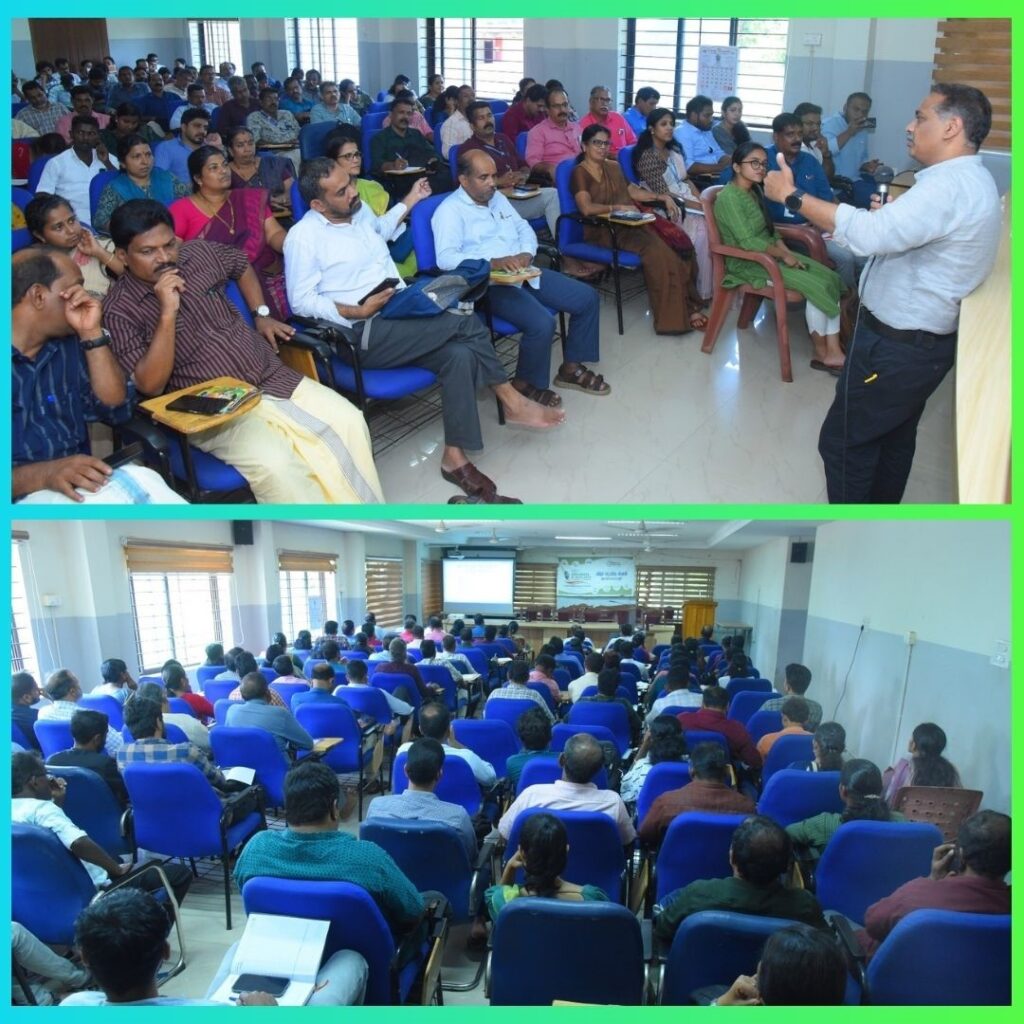
HECS also takes part in Kerala’s public sanitation programmes. At Swachhta Hi Seva 2024 in Kasargod, organised by Suchitwa Mission Kerala, HECS presented its wastewater treatment options to local self-government officials and engineers from across the state. At Vruthi 2025, the Clean Kerala Conclave held in Thiruvananthapuram from 9 to 13 April 2025, HECS exhibited packaged STPs and ETPs and mentored teams in the Wasteathon challenge.
How a Kerala project runs
- Share your site details: building type, number of users or KLD, location, space and reuse plans.
- Sizing and layout: an HECS engineer confirms the capacity, technology and above- or below-ground layout.
- Factory build: the FRP unit is built and tested before dispatch.
- Site preparation: a level base or pit, inlet and outlet levels, and power, by the HECS civil team or, if you prefer, your own contractor.
- Delivery and installation: the unit is placed and connected to pipes, blowers and the control panel.
- Commissioning: biological start-up and handover with operator training.
- After handover: O&M or AMC with HECS SmartHub monitoring.
For consents, share the HECS layout and plant specifications with your consultant for the CTE and CTO applications. The CTO usually needs treated-water test results from a recognised laboratory, which the owner arranges.
Packaged STP in Kerala: FAQs
Can’t find your answer? Ask an HECS engineer. We reply within minutes.
Is an STP mandatory in Kerala?
It depends on the size and use of the building and on your consent conditions. Under the building conditions MoEFCC notified in December 2016, buildings of 20,000 sq m or more must treat all their sewage on site and reuse it, and buildings of 5,000 to 20,000 sq m must install on-site treatment where there is no municipal sewer. Check your Kerala State Pollution Control Board consent and local body approval for the rules that apply to you.
Can a packaged STP be installed below ground in a high-rainfall area?
Yes. FRP tanks are sealed units, and below-ground units sit in a pit with a base and anchoring designed for the groundwater level on your site. Access covers and the control panel stay above ground for maintenance.
What size STP does a resort need?
Size it on guests and staff. NBC 2016 uses 180 litres per bed a day for hotels with lodging and 45 litres per person for staff. A 60-bed resort with 30 staff makes about (60 × 180 + 30 × 45) × 0.8 = 9.7 KLD, so a 10 to 12 KLD plant is a sensible start. Our capacity calculator gives a first estimate.
Can treated water be reused?
Yes, for gardens, toilet flushing and cooling, after filtration and disinfection. At Lords 83 in Wayanad, treated water from the HECS 50 KLD smart STP is reused for gardening, pathways and toilet flushing.
Does HECS maintain plants in Kerala?
HECS offers O&M and AMC contracts with HECS SmartHub remote monitoring, which sends alerts so faults are caught early. At Lords 83, the maintenance team supervises the plant remotely through the app.
How long does installation take?
A HECS Ultima unit is installed in about two days once the base or pit is ready, because it arrives factory-built. The full timeline also depends on layout approval and fabrication; from order to commissioning typically takes 4–6 weeks.
Get a packaged STP for your Kerala site
Share the building type, users or KLD, location and reuse plans. Our team replies within minutes.