
In short: a pharmaceutical ETP treats process effluent that can carry residues of active ingredients, solvents and chemicals, with swings in pH and strength from batch production. A typical plant separates strong and weak streams, equalises and neutralises them, then uses physico-chemical and biological treatment and filtration for discharge or reuse. The design must match your effluent analysis and the limits in your SPCB consent.
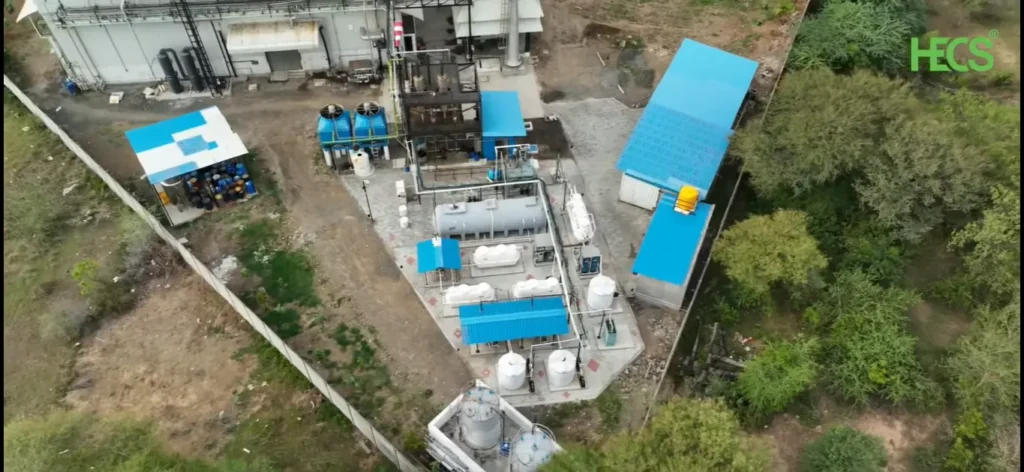
Pharma ETP for Global Pharma
Hybrid MBBR STP on the same site
Prefabricated treatment modules
ETP delivered for ONGC
Why pharma effluent needs its own design
- Batch discharges: flow and strength change through the day as batches start, finish and wash down
- High, variable COD with solvents and residues of active ingredients
- pH swings from acid and alkali washes
- High dissolved solids (TDS) in some streams, which biological treatment does not remove
- Domestic sewage from canteens and toilets, which is better treated in a separate STP

Typical treatment stages
| Stage | What it does |
|---|---|
| Stream segregation | Keeps strong or high-TDS streams apart from low-strength wash water so each is treated the right way |
| Collection and equalisation | Evens out flow and strength from batch production |
| Neutralisation | Brings pH into the range the next stages need |
| Physico-chemical treatment | Coagulation, flocculation and settling remove suspended solids and part of the COD |
| Biological treatment | Bacteria break down biodegradable organics; MBBR or MBR are common in packaged plants |
| Tertiary treatment | Filtration and, where needed, adsorption to polish the water for discharge or reuse |
| Sludge handling | Thickening and dewatering; ETP sludge is often classed as hazardous waste |
High-TDS streams may need evaporation or zero liquid discharge (ZLD) where the consent requires it.

What we need to design your ETP
- Effluent analysis from a recognised laboratory: pH, COD, BOD, TSS, TDS, oil and grease, and any parameter named in your consent
- Daily volume and peak flow for each stream, and the production pattern
- Discharge route: sewer or CETP, surface water, or reuse
- Your State Pollution Control Board consent conditions
- Space available and any existing treatment units
Case: 20 KLD ETP and 6 KLD STP for Global Pharma
Global Pharma had two streams: industrial effluent from API processes carrying pharmaceutical residues, solvents and chemicals, and domestic sewage. HECS supplied a 20 KLD industrial effluent treatment plant and a 6 KLD hybrid MBBR sewage treatment plant, built in FRP prefabricated modules for a corrosive environment, with automated sensors and controls for stable operation. The client now reuses a significant portion of the treated water. Read the full case study.

Related HECS ETP solutions
Pharmaceutical ETP: FAQs
Can’t find your answer? Ask an HECS engineer. We reply within minutes.
What is a pharmaceutical ETP?
An effluent treatment plant designed for wastewater from pharmaceutical manufacturing, which can contain residues of active ingredients, solvents and chemicals and varies with batch production.
Can pharma effluent be treated with sewage?
Domestic sewage is usually treated in a separate STP. Process effluent needs its own treatment, designed from the effluent analysis.
Which biological process suits a packaged pharma ETP?
MBBR handles load swings well; MBR gives finer filtration where water is reused. The right choice depends on the effluent analysis and discharge route.
Is ETP sludge hazardous?
ETP sludge is often classed as hazardous waste and must be stored and disposed of as your consent and the Hazardous Waste Rules require.
What information do you need for a quote?
Your effluent analysis, daily volume and peak flow for each stream, discharge route, consent conditions and the space available.
Do pharma units need zero liquid discharge?
Only where the consent or local rules require it. Check your State Pollution Control Board consent conditions.
Discuss your pharma ETP
Share your effluent analysis, daily volume, discharge route and consent conditions, and we will propose a treatment scheme.