
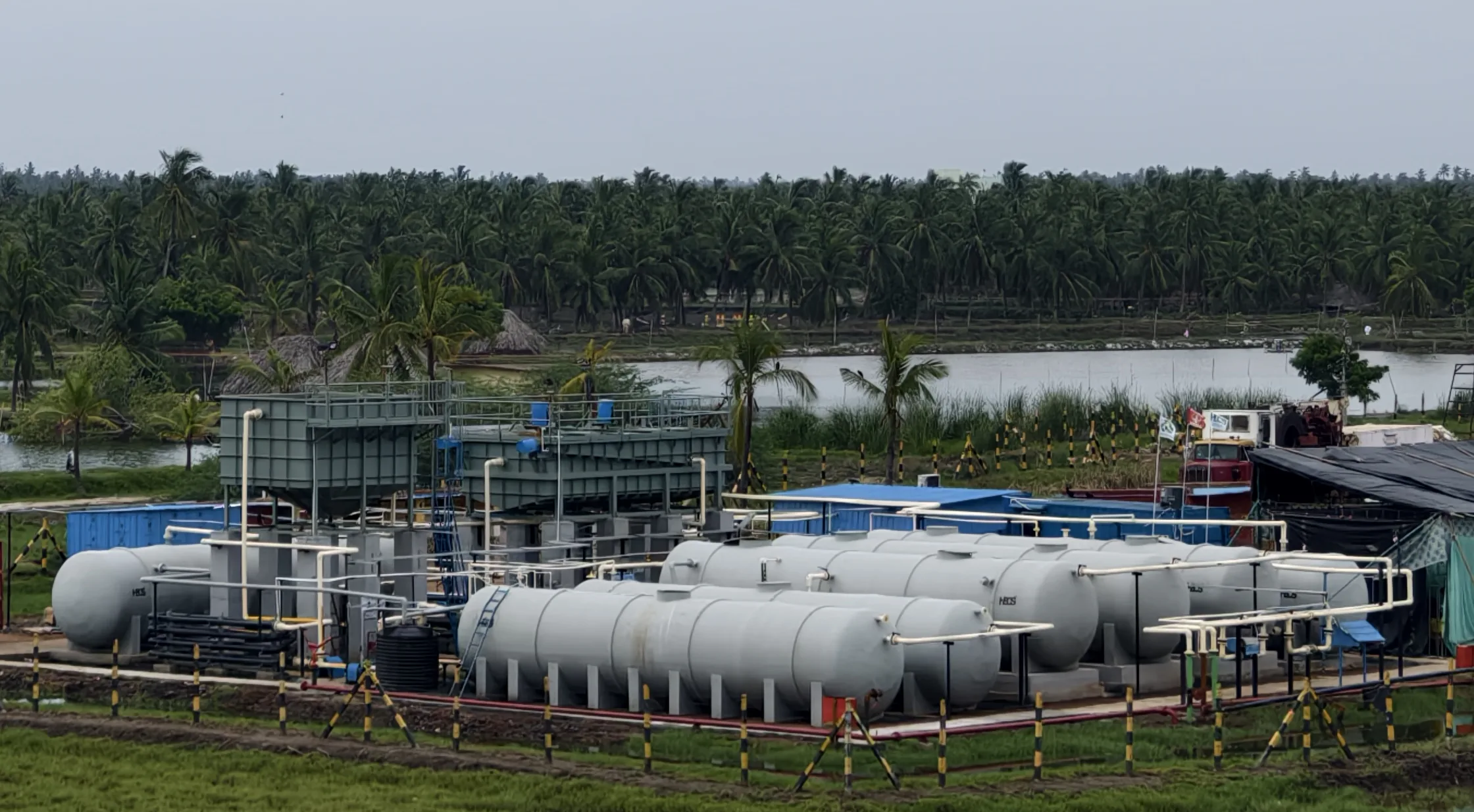
By the HECS engineering team · Hubert Enviro Care Systems (HECS), Chennai · Research date: 7 November 2026 · Effluent treatment plant (ETP) budgets go wrong more often than STP budgets, because industrial effluent is far less predictable than sewage. Two factories with the same flow can need completely different plants: one may need only oil removal and biological treatment, the other may need chemical treatment, membranes and zero liquid discharge. This guide explains what an ETP costs to build and run, why the price swings so widely between industries, and what information you need before you ask a supplier to quote.
In this guide
- Quick answer: how much does an ETP plant cost in India?
- Why ETP cost varies more than STP cost
- What goes into an ETP: cost components by treatment stage
- ETP cost drivers by industry
- Discharge route: the decision that changes ETP cost the most
- Packaged ETP or custom-built ETP?
- ETP running costs: what to budget every year
- Regulations that shape ETP design and cost
- How an ETP project runs, and where time and cost go
- Common ETP buying mistakes that increase cost later
- ETP quotation checklist
- Why choose HECS for your effluent treatment plant
- Discuss your ETP project with an engineer
- Frequently asked questions about ETP cost
- Conclusion
Quick answer: how much does an ETP plant cost in India?
ETP cost in India depends more on what is in your effluent than on how much of it there is. The main drivers are the effluent’s characteristics (COD, BOD, TDS, oil and grease, colour, heavy metals, pH), the flow and its variation, where the treated water must go (sewer or CETP, surface discharge, reuse or zero liquid discharge), the treatment stages that result, and how sludge must be handled. A small biodegradable stream, such as wash water from a food unit, needs a far simpler plant than a high-TDS textile or chemical effluent that requires reverse osmosis and evaporation. Get a lab analysis of your effluent, confirm the discharge conditions in your SPCB consent, and ask for an itemised design-and-cost proposal.
| Cost driver | Lower-cost situation | Higher-cost situation |
|---|---|---|
| Effluent strength | Low COD, biodegradable | High COD, non-biodegradable, toxic |
| Dissolved salts (TDS) | Low TDS | High TDS needing RO/evaporation |
| Discharge route | To sewer or CETP (pre-treatment) | ZLD or high-grade reuse |
| Flow pattern | Steady, continuous | Batch dumps, shock loads |
| Sludge | Non-hazardous, low volume | Hazardous sludge needing TSDF disposal |
Why ETP cost varies more than STP cost
Domestic sewage is broadly similar from one building to the next, which is why STPs can be built in standard sizes (see our separate guide to STP plant cost in India). Industrial effluent is different:
- Each industry has its own pollutants. Dyes and salts in textiles, solvents and high COD in pharma, fats and proteins in dairy, oil and paint in automobile plants, metals in electroplating.
- Concentrations change during the day. Batch processes, washing cycles and cleaning-in-place can send shock loads.
- Discharge conditions differ by site. An industry discharging to a CETP may only need pre-treatment; one under a ZLD condition must recover almost all the water.
- Sludge may be hazardous. That changes how it is dewatered, stored and disposed of.
So an ETP “price per KLD” is only meaningful between plants treating similar effluent to the same standard.
What goes into an ETP: cost components by treatment stage
| Stage | Typical units | When it is needed |
|---|---|---|
| Preliminary | Bar screen, oil and grease trap, collection sump | Almost always |
| Equalisation and neutralisation | Equalisation tank with mixing, pH correction dosing | Variable flow or pH |
| Primary (physico-chemical) | Coagulation, flocculation, clarifier or DAF | Suspended solids, colour, oil, metals |
| Secondary (biological) | MBBR, activated sludge (ASP), SBR or MBR | Biodegradable organics (BOD/COD) |
| Tertiary | Pressure sand filter, activated carbon filter, ultrafiltration | Polishing for discharge or reuse |
| Advanced treatment | RO, advanced oxidation, evaporator / crystalliser | High TDS, recalcitrant COD, ZLD |
| Disinfection | Chlorination, UV or ozone | Reuse, hospital effluent |
| Sludge handling | Sludge thickener, filter press, drying beds, storage | All plants; scale depends on load |
| Instrumentation and control | PLC panel, flow meters, online analysers, IoT monitoring | Automation and compliance reporting |
You can read more about the first two treatment stages in our explainer on primary and secondary effluent treatment.
ETP cost drivers by industry
The table below shows what typically pushes ETP cost up in common sectors. It is a planning guide, not a design; every plant must be designed on your own effluent data.
| Industry | Typical effluent challenges | What usually adds cost |
|---|---|---|
| Textile, dyeing and garment processing | Colour, high TDS, variable pH, high COD | Colour removal, RO and evaporation where ZLD applies |
| Pharmaceuticals and bulk drugs | High and variable COD, solvents, low biodegradability | Segregation of streams, advanced oxidation, stripping, ZLD |
| Food, beverage and dairy | High BOD, fats, oil and grease, proteins | Oil and grease removal, larger biological stage, sludge handling |
| Automobile and engineering | Oil, paint, detergents, metals from washing and surface treatment | Oil separation, chemical treatment, sometimes membranes for reuse |
| Electroplating and metal finishing | Heavy metals, cyanide or chromium (process-dependent) | Chemical treatment stages, hazardous sludge |
| Hospitals and laboratories | Pathogens, chemicals, disinfectants | Disinfection, segregation from sewage, compliance documentation |
| Laundries | Detergents, lint, high volume | Filtration, reuse treatment |
| Car wash and service stations | Oil, grit, detergents | Oil and grit separation, recycling loop |
HECS has published guides for specific sectors, including textile ETPs in Tiruppur, the MediClear hospital ETP, the Eco Launder laundry ETP and the Eco Wash car wash ETP.
Discharge route: the decision that changes ETP cost the most
Where the treated effluent goes sets the treatment standard, and the standard sets the number of treatment stages.
- Discharge to a sewer or CETP: the industry usually treats only to the CETP’s inlet norms. This is often the lowest-cost route, but CETP charges apply.
- Discharge to surface water or land: the effluent must meet the discharge standards in your consent, which are based on the general or industry-specific standards under the Environment (Protection) Rules, 1986 (see the CPCB list of effluent standards).
- Reuse within the plant: treated water for cooling towers, gardening or process use needs tertiary treatment, sometimes ultrafiltration or RO.
- Zero liquid discharge (ZLD): no effluent leaves the premises. ZLD normally combines treatment, RO and an evaporator or crystalliser, so it has the highest capital and running cost. Some sectors and states impose ZLD as a consent condition.
Practical tip: read your consent order before you request a quote. If it already specifies ZLD or reuse, a quote for “discharge-grade” treatment will not get your plant approved.
Packaged ETP or custom-built ETP?
| Factor | Packaged ETP (factory-built) | Custom civil / site-built ETP |
|---|---|---|
| Best for | Small and medium flows, compact sites, single effluent type | Large flows, complex or multiple streams |
| Build time | Shorter: fabricated and tested in a factory | Longer: civil work on site |
| Footprint | Compact; can be modular | Larger |
| Expansion | Add modules | Requires civil extension |
| Flexibility | Process range set by design | Fully customised |
HECS builds customised packaged ETPs in FRP that combine physico-chemical treatment, biological treatment and filtration (MBR, UF or RO as needed), and a compact ETP, HECS X-Fluent, for smaller industrial and commercial streams.
ETP running costs: what to budget every year
Running cost often decides whether an ETP is actually operated. Budget for:
- Chemicals: coagulants, flocculants, pH correction, disinfectants and antiscalants for RO. In physico-chemical plants these are often the largest running cost.
- Power: blowers for the biological stage, pumps, mixers, and evaporators if you have ZLD (evaporation is energy-intensive).
- Sludge disposal: ETP sludge may be classed as hazardous waste under the Hazardous and Other Wastes (Management and Transboundary Movement) Rules, 2016, in which case it must be stored and sent to an authorised facility. Our article on ETP sludge management explains the options.
- Operators and supervision: trained manpower per shift, depending on plant size and automation.
- Membranes and spares: UF/RO and MBR membranes, pump seals, diffusers, dosing pumps.
- Monitoring and testing: lab analysis, and online continuous monitoring where your industry is required to have it.
Regulations that shape ETP design and cost
- Water (Prevention and Control of Pollution) Act, 1974: industries need SPCB Consent to Establish (CTE) before building and Consent to Operate (CTO) before running; consent conditions set your discharge limits.
- Environment (Protection) Rules, 1986: general standards for discharge of environmental pollutants and industry-specific standards notified by MoEFCC/CPCB.
- Hazardous and Other Wastes Rules, 2016: storage, transport and disposal of hazardous ETP sludge.
- Online continuous effluent monitoring: CPCB has directed certain categories of highly polluting industries to install online monitoring connected to CPCB/SPCB servers.
- ZLD conditions: imposed for specific sectors or regions through consent conditions or state directions.
How an ETP project runs, and where time and cost go
- Effluent data: your lab analysis of the effluent (COD, BOD, TSS, TDS, oil and grease, pH and any industry-specific parameters), daily and peak flow, and process details.
- Process design: treatment scheme, mass balance, sludge quantity, layout and power load.
- Itemised proposal: scope, exclusions, delivery period and the outlet values the design is based on.
- Approvals: CTE application support with drawings and process details.
- Fabrication and site work: factory fabrication for packaged units; foundations and civil work on site.
- Installation and commissioning: hook-up, chemical dosing set-up, biological seeding, stabilisation and performance trial.
- Handover: operator training, O&M manual, records, then AMC.
For example, HECS completed a 1 MLD effluent treatment plant at an ONGC oil exploration field in Gopavaram, Andhra Pradesh in about six months.
Common ETP buying mistakes that increase cost later
- Designing on assumed effluent values instead of measured data, then finding the plant cannot meet the outlet standard.
- Mixing all streams together when segregating a small, strong stream would make the rest much cheaper to treat.
- Ignoring TDS. Biological treatment does not remove dissolved salts; if your limits or reuse plans need low TDS, budget for membranes.
- Under-sizing the equalisation tank, so shock loads upset the biological stage.
- Leaving out sludge dewatering and storage, then paying more to dispose of wet sludge.
- Choosing on capital cost alone, when chemical and power costs dominate over the plant’s life.
ETP quotation checklist
Send the supplier:
- Industry and process description, and the source of each effluent stream
- Lab analysis of the effluent (recent, from an accredited laboratory where possible)
- Daily flow, peak flow and operating hours or batch pattern
- SPCB consent conditions, including any ZLD or reuse requirement
- Available area and site photos
- Existing treatment units, if this is an upgrade
Ask every bidder:
- Which treatment scheme, and which outlet values it is designed to achieve
- Expected chemical consumption, power load and sludge quantity
- What is excluded (civil work, electrical supply, testing, GST, freight)
- Membrane life and replacement cost, if membranes are used
- Commissioning period, performance guarantee basis and AMC terms
- References for similar effluent
Why choose HECS for your effluent treatment plant
Hubert Enviro Care Systems (HECS), founded in 1997 and based in Chennai, designs, manufactures, installs and commissions packaged effluent treatment plants in FRP, with experience in projects from 1 KLD to 1 MLD. HECS designs each ETP from the client’s effluent analysis, daily and peak flow, discharge or reuse standard and available space.
- ETP range: customised packaged ETPs, HECS X-Fluent compact ETP, HECS MediClear hospital ETP, HECS Eco Launder laundry ETP and HECS Eco Wash car wash ETP.
- Industrial project experience, for example a 40 KLD MBR-based packaged ETP for an automobile ancillary manufacturer, a 20 KLD ETP and 6 KLD STP for a pharmaceutical plant and the 1 MLD ETP for ONGC at Gopavaram.
- Automation and monitoring: PLC and IoT systems, with remote monitoring through HECS SmartHub.
- Combined sewage and effluent solutions for factories that need both an STP and an ETP; see industrial sewage treatment plants.
Discuss your ETP project with an engineer
Send your effluent analysis, flow and consent conditions. A HECS engineer will review them and propose a treatment scheme with an itemised cost.
Frequently asked questions about ETP cost
What is the cost of an ETP plant in India?
There is no standard price. ETP cost depends mainly on effluent characteristics (COD, BOD, TDS, oil, colour, metals), flow, the discharge route (sewer or CETP, surface discharge, reuse or ZLD), the treatment stages required and sludge handling. An itemised quote needs your effluent analysis and consent conditions.
Why do two ETPs of the same capacity have very different prices?
Because the effluent and the outlet standard differ. A 50 KLD biodegradable stream may need only screening, equalisation, biological treatment and filtration, while a 50 KLD high-TDS stream may also need chemical treatment, RO and an evaporator.
What is the cost of a small ETP plant?
Small ETPs have a higher cost per KLD because instrumentation, control panels, design and commissioning are fixed costs. A factory-built packaged ETP often keeps small-plant cost down by reducing civil work and site time.
What is the most expensive part of an ETP?
For high-TDS or ZLD plants, the RO and evaporation stages usually carry the largest capital and energy cost. For conventional plants, the biological stage and sludge handling are often the largest items, while chemicals tend to dominate running cost in physico-chemical treatment.
How much does zero liquid discharge (ZLD) add to ETP cost?
ZLD adds RO, reject management and evaporation or crystallisation, so it raises both capital and running cost significantly compared with a discharge-grade ETP. It is usually adopted where the consent or state rules require it, or where water recovery has clear value.
What are the running costs of an ETP?
The main running costs are chemicals, power, sludge disposal (which may be hazardous), operators, membrane replacement and spares, and monitoring and lab testing.
Is ETP sludge hazardous waste?
It can be. Depending on the industry and process, ETP sludge may be covered by the Hazardous and Other Wastes (Management and Transboundary Movement) Rules, 2016, which control its storage and disposal through authorised facilities. Check with your SPCB.
Do I need SPCB consent for an ETP?
Yes. Industries need Consent to Establish before construction and Consent to Operate before starting operations under the Water Act, 1974. The consent sets the discharge conditions the ETP must meet.
What is the difference between an ETP and an STP?
An STP treats domestic sewage from toilets, kitchens and bathrooms. An ETP treats industrial process effluent, which can contain chemicals, oils, dyes, metals or high salts. Many factories need both, kept separate or designed together.
Can treated ETP water be reused?
Often yes, after suitable tertiary treatment, for uses such as cooling towers, gardening or process water. The required treatment depends on the reuse quality needed and the consent conditions.
How long does it take to install an ETP?
Packaged ETPs are fabricated and tested in a factory, so site installation is shorter. Larger custom plants with civil work take longer; HECS's 1 MLD ETP for ONGC at Gopavaram was completed in about six months.
What information do I need to get an accurate ETP quote?
Your effluent analysis, daily and peak flow, operating pattern, SPCB consent conditions (including any reuse or ZLD requirement), available space, site photos and details of any existing treatment units.
Conclusion
The cost of an ETP is decided long before the purchase order: by your effluent chemistry, the discharge route in your consent, and how carefully streams are segregated. Measure your effluent, read your consent conditions, compare quotes on the same scope, and weigh chemical, power and sludge costs alongside the purchase price. When you’re ready, send your effluent data to HECS for a treatment scheme and itemised ETP proposal.
Sources: Water (Prevention and Control of Pollution) Act, 1974; Environment (Protection) Rules, 1986 (Schedule VI general standards and industry-specific standards, listed on the CPCB effluent and emission standards page); Hazardous and Other Wastes (Management and Transboundary Movement) Rules, 2016; CPCB directions on online continuous effluent monitoring. HECS product and project information from hecspstp.com.