
Packaged effluent treatment plant for hospitals, clinics and diagnostic centres
HECS MediClear is a factory-built, packaged effluent treatment plant (ETP) for hospitals, clinics and diagnostic centres. It is built in FRP (fibre-reinforced plastic) with multiple inbuilt chambers, treats hospital wastewater by screening, chemical and biological treatment, settling and filtration, and disinfects the treated water before discharge or reuse.
Hubert Enviro Care Systems (HECS), Chennai, has designed and built wastewater treatment plants since 1997. Each MediClear is designed to the discharge limits in your State Pollution Control Board consent and the Bio-Medical Waste Management Rules, 2016.
Don’t know your KLD? Share your bed count and departments and we will size it. Or WhatsApp an engineer.
- Factory-built FRP
- Above or below ground
- Installation, O&M and AMC
- Since 1997
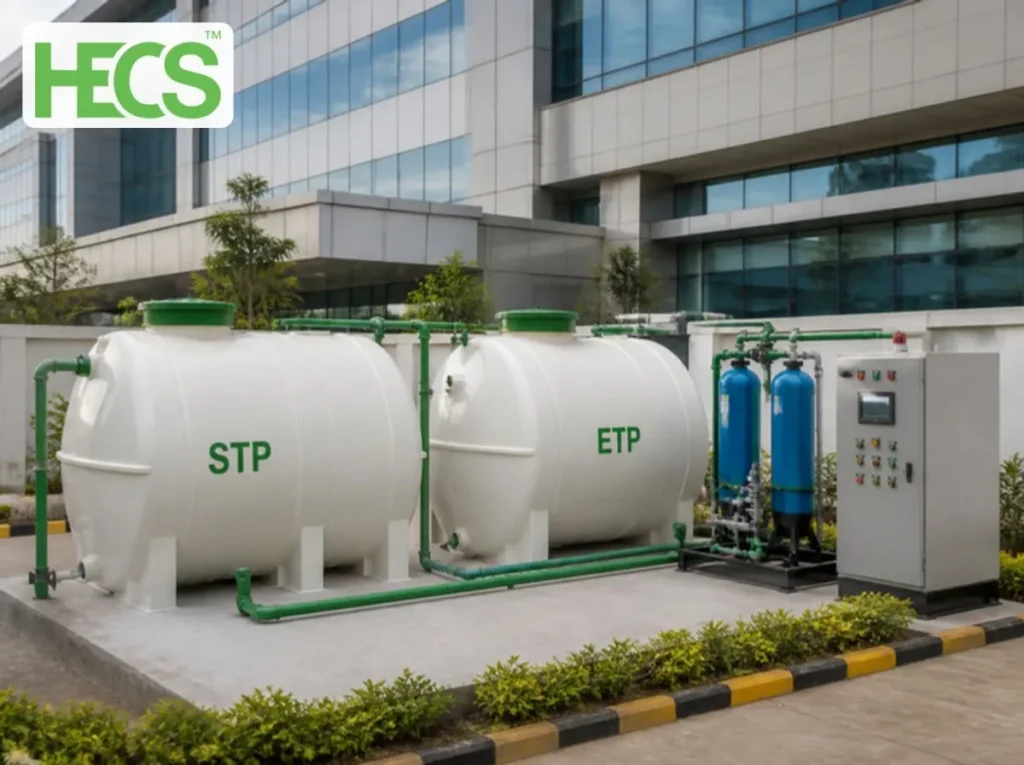
Hubert Enviro Care Systems, Chennai
factory-built with inbuilt chambers
hospital effluent streams it is designed for
for the whole hospital campus
What is a hospital effluent treatment plant?
A hospital effluent treatment plant (ETP) treats the clinical and process wastewater a healthcare facility produces, from laboratories, operation theatres, CSSD and autoclaves, laundry and cleaning, before it is discharged or reused. This effluent can carry disinfectants, chemicals, detergents and pathogens, so it needs screening, chemical and biological treatment and disinfection.
Sewage from toilets, wards and kitchens is a separate stream treated in a sewage treatment plant (STP). For sewage capacity by bed count, see the hospital STP guide.
MediClear key facts
- Type: packaged hospital effluent treatment plant (ETP)
- Treats: laboratory, operation theatre, laundry, autoclave and cleaning-disinfectant effluent
- Does not treat: radioactive effluent; dialysis effluent needs extra treatment for TDS
- Process: screening, chemical dosing, aerobic biological treatment, settling, pressure filtration, disinfection
- Construction: FRP shell, plug-and-play; above- or below-ground installation
- Also called: hospital ETP, packaged ETP for hospitals, PETP for hospitals
What HECS MediClear is designed to treat
In short: MediClear treats laboratory, operation theatre, laundry, autoclave and cleaning-disinfectant effluent. Radioactive effluent is excluded, and dialysis effluent needs additional treatment for dissolved salts (TDS).
| Hospital stream | MediClear role | What else is needed |
|---|---|---|
| Laboratory effluent | Treated | Chemical liquid waste (reagents, discarded chemicals) collected separately and pre-treated, as the BMW Rules require |
| Operation theatre and ICU washings | Treated | — |
| Autoclave / CSSD water | Treated | Hot discharges cooled in the collection tank |
| Hospital laundry | Treated | Large laundries may need a dedicated plant: HECS ECO LAUNDER |
| Cleaning and disinfectant water | Treated | — |
| Dialysis effluent | Not in the standard design | Raises TDS; needs additional treatment to reduce TDS |
| Radioactive effluent | Not treated | Handled under AERB rules, separately |
| X-ray developer, mercury, cytotoxic drugs | Not treated | Segregated and disposed of through an authorised route |
| Toilet and ward sewage | Sewage plant | A hospital STP: hospital STP guide |
MediClear does not replace segregation of chemical liquid waste, and HECS does not claim removal of pharmaceutical residues. Outlet quality depends on the inlet characteristics in the agreed design basis and on correct operation.
Hospital wastewater sources and how each is handled
Laboratories and pathology
Reagents, stains and pH swings. Chemical waste is segregated; the rest is equalised in the collection tank.
Operation theatres and ICU
Washings with body fluids and disinfectants; treated biologically and disinfected.
Autoclave and CSSD
Hot, detergent-laden water; cooled and balanced before treatment.
Laundry
Detergents, lint and suspended solids; screened, then chemically and biologically treated.
Cleaning and disinfectants
Housekeeping water with disinfectant residues; diluted and treated in the main line.
Dialysis (special case)
High dissolved salts. Not in the standard design; needs additional TDS treatment.
How MediClear treats hospital effluent
Eight stages from inlet to outlet, as shown in the HECS MediClear process flow diagram below.
1. Coarse and fine bar screens
Remove rags, plastics and lint at the inlet.
2. Collection tank and pumping
Holds and balances effluent; raw effluent pump with an optional flow meter.
3. Chemical dosing and settling
Alum and polyelectrolyte dosing with an aerated stirrer; solids settle in the settling chamber.
4. Aeration (biological)
Air blowers feed the aeration chamber, where bacteria break down the organic load.
5. Secondary settling
Biomass settles out; clear water flows to the filter feed chamber.
6. Pressure filtration
Filter feed pumps push water through two pressure filters to polish it.
7. Disinfection
Treated water is disinfected before discharge or reuse.
8. Sludge handling
Sludge pump to a sludge bag system for dewatering and authorised disposal.

Design inlet and treated-water quality
The standard MediClear process is designed for typical hospital effluent and treated water within these values. Capacity, footprint and power are confirmed in the technical proposal.
| Parameter | Raw hospital effluent (design inlet) | Treated water (design outlet) |
|---|---|---|
| pH | 6–9 | 6–9 |
| BOD (mg/l) | 150 | < 20 |
| COD (mg/l) | 600 | < 100 |
| TSS (mg/l) | 150 | < 50 |
| TDS (mg/l) | < 2,000 | < 2,000 |
| Total coliform (MPN/100 ml) | 1,000 | 100 |
Design basis from the HECS MediClear PETP process flow diagram. Actual design values, capacity, footprint and power are fixed in each technical proposal for your inlet data and SPCB consent.
Hospital ETP vs STP: what does a hospital need?
In short: sewage goes to an STP, clinical and process effluent goes to an ETP, and most hospitals need both as separate lines.
| Hospital STP | Hospital ETP (MediClear) | Typical hospital campus | |
|---|---|---|---|
| Treats | Domestic sewage from toilets, wards, kitchens | Clinical and process effluent: lab, OT, CSSD, laundry, disinfectants | Both, kept as separate lines |
| Key stages | Screening, biological, settling, disinfection | Screening, chemical dosing, biological, settling, filtration, disinfection | STP + ETP sized separately |
| Rules | SPCB consent and sewage discharge standards | BMW Rules 2016 liquid-waste standards and SPCB consent | Consent order for the hospital |
| HECS option | Ultima (MBBR), Amaze (MBR) | MediClear | One supplier, one design basis |
What we need to size your hospital ETP
Don’t have all of this? Send what you have and an HECS engineer will help with the rest.
- Hospital type and number of beds (now and planned)
- Departments: laboratory, OT count, CSSD, laundry, dialysis
- Water use records or estimated effluent flow (KLD)
- Discharge route (sewer, land, reuse) and your SPCB consent conditions
- Space available, above or below ground, with site photos
- Any existing inlet test report
What decides the cost of a hospital ETP?
- Capacity (KLD) and peak flow
- Which streams are included (lab, laundry, dialysis)
- Filtration and disinfection level for reuse
- Above- or below-ground installation and civil work
- Automation and instrumentation
- Site location and O&M / AMC scope
Send your details for a sized quotation.
From enquiry to a running plant, then O&M
1. Requirement and design basis
Beds, departments, flows, consent limits and site details.
2. Technical proposal
Capacity, process, layout, utilities and quotation.
3. Factory build
The FRP plant is fabricated at the HECS factory while site work runs in parallel.
4. Delivery and installation
Placed above or below ground and connected to inlet and outlet lines.
5. Commissioning and handover
Start-up, operator training and handover.
Operation, maintenance and AMC
- Daily checks by a trained operator: screens, blowers, dosing, filters and sludge level
- Preventive maintenance of pumps, blowers and dosing systems
- Sludge removal scheduling and filter backwash routines
- Annual maintenance contracts (AMC), spares and breakdown support from HECS
- Periodic treated-water testing as your consent requires is done through an NABL or SPCB-recognised laboratory
Compliance: BMW Rules 2016 and SPCB consent
Liquid waste from healthcare facilities is regulated by the Bio-Medical Waste Management Rules, 2016 (MoEF&CC, G.S.R. 343(E), 28 March 2016, as amended) together with the Consent to Establish and Consent to Operate your hospital holds from the State Pollution Control Board under the Water Act, 1974.
Standards for liquid waste under the BMW Rules, 2016:
| Parameter | Limit |
|---|---|
| pH | 6.5–9.0 |
| Suspended solids | 100 mg/l |
| Oil and grease | 10 mg/l |
| BOD | 30 mg/l |
| COD | 250 mg/l |
| Bio-assay test | 90% survival of fish after 96 hours in 100% effluent |
These limits apply to healthcare facilities that are not connected to a public sewer, or are connected to a sewer without terminal treatment. Where the sewer has terminal treatment, the general standards under the Environment (Protection) Rules, 1986 apply. Chemical liquid waste must be collected separately and pre-treated before mixing with other wastewater. Your SPCB consent may set stricter or additional limits and always governs. Source: CPCB – Bio-Medical Waste.
See also STP and ETP regulations by state.
Treated-water reuse
Where your SPCB consent allows, treated water can be reused for non-potable purposes such as gardening or toilet flushing. The reuse quality required decides the filtration and disinfection stages.
Video: Packaged Effluent Treatment Plant (PETP) technology for hospitals – HECS MediClear.

Why hospitals evaluate HECS
- Wastewater treatment plants designed and manufactured since 1997
- In-house FRP manufacturing; plants are built and checked in the factory
- STP and ETP from one engineering team, with one design basis for the campus
- Installation, commissioning, operator training and AMC
- Quick response: an HECS engineer replies to enquiries within minutes
Hospital ETP: frequently asked questions
Is an ETP mandatory for hospitals in India?
Healthcare facilities must treat liquid waste to the standards in the Bio-Medical Waste Management Rules, 2016 and hold consent from their State Pollution Control Board under the Water Act, 1974. Whether you need a separate ETP, a combined plant or pretreatment before a sewer depends on your discharge route and consent order.
What is the difference between a hospital ETP and a hospital STP?
A hospital STP treats domestic sewage from toilets, wards and kitchens. A hospital ETP treats clinical and process effluent from laboratories, operation theatres, CSSD, laundry and disinfection. Most hospitals need both, sized as separate lines.
What can HECS MediClear treat?
MediClear is designed for laboratory, operation theatre, laundry, autoclave and cleaning-disinfectant effluent. It does not treat radioactive effluent. Dialysis effluent raises TDS and needs additional treatment. Chemical liquid waste must be segregated and pre-treated first, as the BMW Rules require.
What are the stages of hospital effluent treatment in MediClear?
Coarse and fine screening, a collection tank, chemical dosing (alum and polyelectrolyte) with settling, aerobic biological treatment in an aeration chamber, secondary settling, pressure filtration, disinfection and sludge handling through a sludge bag system.
How is a hospital ETP sized?
From the hospital’s departments, bed count and actual water use or effluent flow in KLD, plus your consent limits and reuse plans. Share your bed count and departments and an HECS engineer will size the plant.
What treated-water quality is MediClear designed for?
The HECS MediClear process design is based on treated water with BOD below 20 mg/l, COD below 100 mg/l and TSS below 50 mg/l from a typical hospital effluent inlet. Final values are fixed in the proposal for your inlet data and SPCB consent.
What does a hospital ETP cost?
Cost depends on capacity, the streams included, the filtration and disinfection level, above- or below-ground installation, automation, site location and the O&M or AMC scope. Send your details for a sized quotation.
How often does a hospital ETP need maintenance?
A trained operator checks screens, blowers, dosing, filters and sludge level daily. Pumps, blowers and dosing systems need preventive maintenance, and sludge is removed on a schedule. HECS offers AMC with spares and breakdown support.
Can treated hospital effluent be reused?
Treated water can be used for non-potable purposes such as gardening or flushing where your SPCB consent allows it. The reuse quality required decides the filtration and disinfection stages.
How do I choose a hospital ETP manufacturer?
Ask for the design basis and committed outlet parameters in writing, the list of streams the plant can and cannot treat, references at similar facilities, factory build details, the O&M and AMC scope, and response times for service.
Discuss your hospital ETP project
Tell us about your facility and an HECS engineer will reply within minutes with a recommended configuration, or the questions needed to size it. Helpful to include:
- Hospital name and city
- Number of beds and departments
- Need: new ETP, upgrade, O&M or AMC
- Effluent flow in KLD, if known
- SPCB consent conditions, if available
Prefer to talk?
Hubert Enviro Care Systems, A21, 3rd Phase, TVK Industrial Estate, Guindy, Chennai 600032. Your details are used only to respond to this enquiry.
Related HECS solutions and guides
- Hospital STP in India: capacity, cost and compliance
- HECS ECO LAUNDER laundry effluent treatment plant
- Customised packaged effluent treatment plants
- HECS Amaze MBR packaged STP
- HECS Ultima MBBR packaged STP
- Effluent treatment plants in India
- Water consumption and sewage generation calculator
- Completed STP and ETP projects