
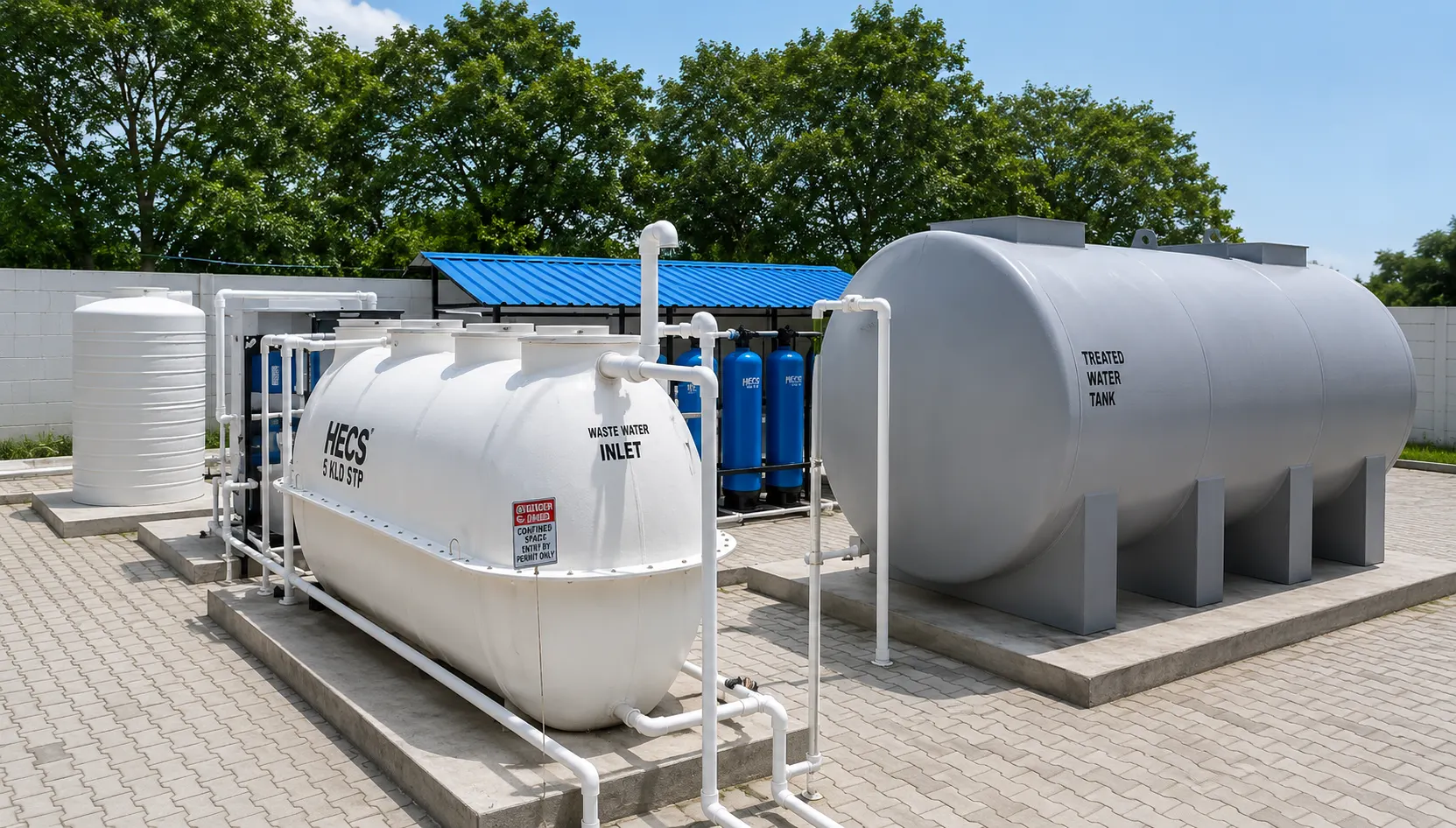
Quick answer: MBBR suits most apartments, hotels, schools and offices: it is compact, handles load swings and is simple to run. MBR gives the cleanest water for reuse in the smallest space, but costs more to buy and run and needs membrane cleaning. SBR treats sewage in timed batches in one tank and can remove nutrients well, but depends on reliable automation. The right choice depends on your outlet or reuse standard, space, budget and who will run the plant.
BOD and TSS, HECS Amaze (MBR)
HECS Ultima (MBBR) running noise
A week of attention, HECS Ultima
To install a HECS Ultima unit
How each technology works
MBBR (moving bed biofilm reactor)
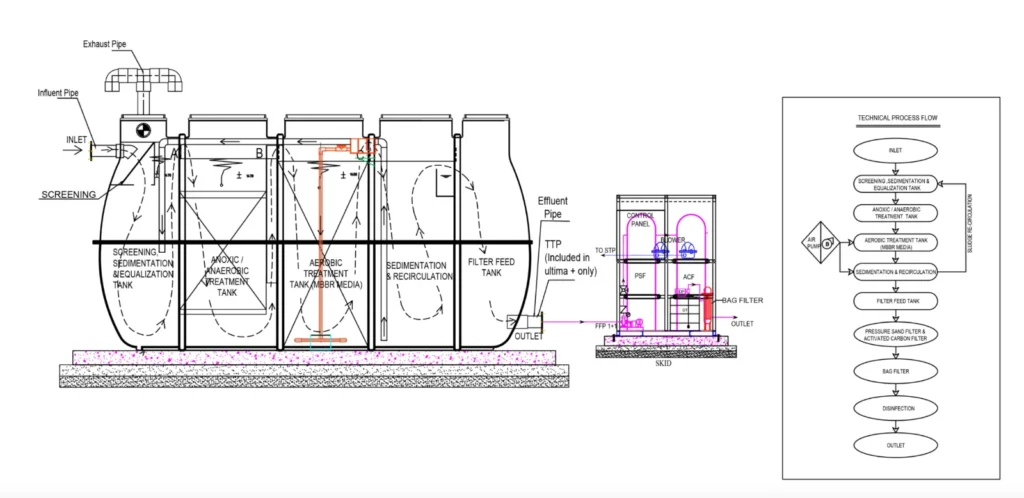
Sewage flows through aerated tanks filled with small plastic carriers (media). Bacteria grow as a biofilm on the media and break down the organic load (BOD and COD). Screens keep the media in the tank, and a settling stage and filters remove solids before disinfection. Because the biofilm stays on the media, MBBR copes well with changes in load and usually needs no return-sludge line.
MBR (membrane bioreactor)
An MBR combines activated-sludge treatment with membrane filtration. Instead of a settling tank, submerged membranes with very fine pores draw clear water out of the tank and hold back solids and most bacteria. This gives high-quality treated water in a small footprint. The membranes need air scouring, regular cleaning and eventual replacement.
SBR (sequencing batch reactor)
An SBR treats sewage in batches in the same tank: fill, aerate, settle, draw off the clear water, then idle. Adjusting the cycle times lets an SBR be tuned for nitrogen and phosphorus removal. It needs equalisation or more than one tank for continuous inflow, and dependable controls and decanters.
MBBR vs MBR vs SBR at a glance
| Factor | MBBR | MBR | SBR |
|---|---|---|---|
| How it works | Biofilm on moving plastic media, continuous flow | Activated sludge plus membrane filtration | Batch cycles in one tank |
| Treated-water quality | Good; meets typical discharge standards with filtration and disinfection | Highest; suited to non-potable reuse | Good; strong on nutrient removal when well controlled |
| Footprint | Compact | Smallest | Moderate |
| Power use | Moderate | Highest (membrane air scouring and pumping) | Moderate |
| Handling load swings | Very good | Good | Good, with equalisation |
| Operator skill | Low to moderate | Moderate to high | Moderate; relies on automation |
| Main maintenance items | Blowers, pumps, media screens, filters | Membrane cleaning and replacement, blowers, pumps | Decanters, valves, controls, blowers |
| Capital cost | Lower | Higher | Moderate |
| Best fit | Apartments, hotels, schools, offices, factory domestic sewage | Reuse projects, tight sites, stricter outlet limits | Sites with nutrient limits and steady supervision |

Which one should you choose?
- Choose MBBR for a robust, low-attention plant for typical discharge or garden reuse.
- Choose MBR if treated water must be reused for flushing or cooling, the outlet limits are strict, or space is very tight, and you can budget for higher running costs.
- Consider SBR if nutrient removal matters and the site has reliable power, automation and supervision.
- Check your consent or local outlet limits first: they decide how far treatment must go.
HECS options
HECS Ultima (MBBR)
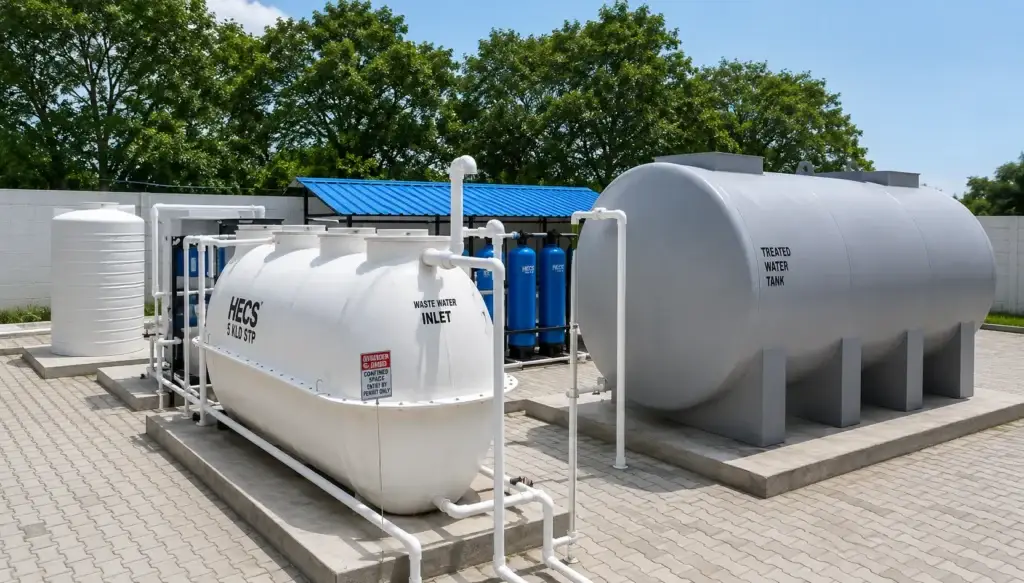
FRP packaged STP using MBBR, installed above or below ground in about two days, with IoT alerts and reports.
HECS Amaze (MBR)
FRP packaged MBR STP with Mitsubishi membranes, designed for treated water with BOD and TSS below 5 mg/l for reuse.
See HECS Ultima and HECS Amaze, or use our STP capacity calculator. Not sure which suits your building? Share your users or KLD, space and reuse plans and an HECS engineer will recommend one.
MBBR, MBR and SBR: FAQs
Can’t find your answer? Ask an HECS engineer. We reply within minutes.
Which is better, SBR or MBBR?
For most buildings MBBR is simpler to run and copes better with load swings. SBR can remove nutrients well but depends on reliable automation and supervision.
Which is better, MBR or MBBR?
MBR gives cleaner water in less space; MBBR costs less to buy and run. Choose MBR when you need reuse-grade water or the site is very tight.
What is MBBR media?
Small plastic carriers that move in the aeration tank and give bacteria a surface to grow on as a biofilm.
Do MBR membranes need replacing?
Yes. Membranes need regular cleaning and are replaced after some years, which is a major running cost to plan for.
Which STP technology uses the least space?
MBR, because the membranes replace the settling tank and filters.
Can an existing plant be upgraded to MBBR or MBR?
Often, depending on the tanks and the site. An engineer needs to assess the existing plant first.
Not sure which technology to choose?
Tell us your building type, users or KLD, space and reuse plans, and an HECS engineer will recommend MBBR or MBR with a quote.
[…] Both are factory-built FRP units for above- or below-ground installation, with HECS SmartHub IoT monitoring. Compare in MBBR vs MBR vs SBR. […]
[…] them in MBBR vs MBR vs SBR, or see the HECS Ultima and HECS Amaze […]
[…] them in MBBR vs MBR vs SBR, or see the HECS Ultima and HECS Amaze […]