
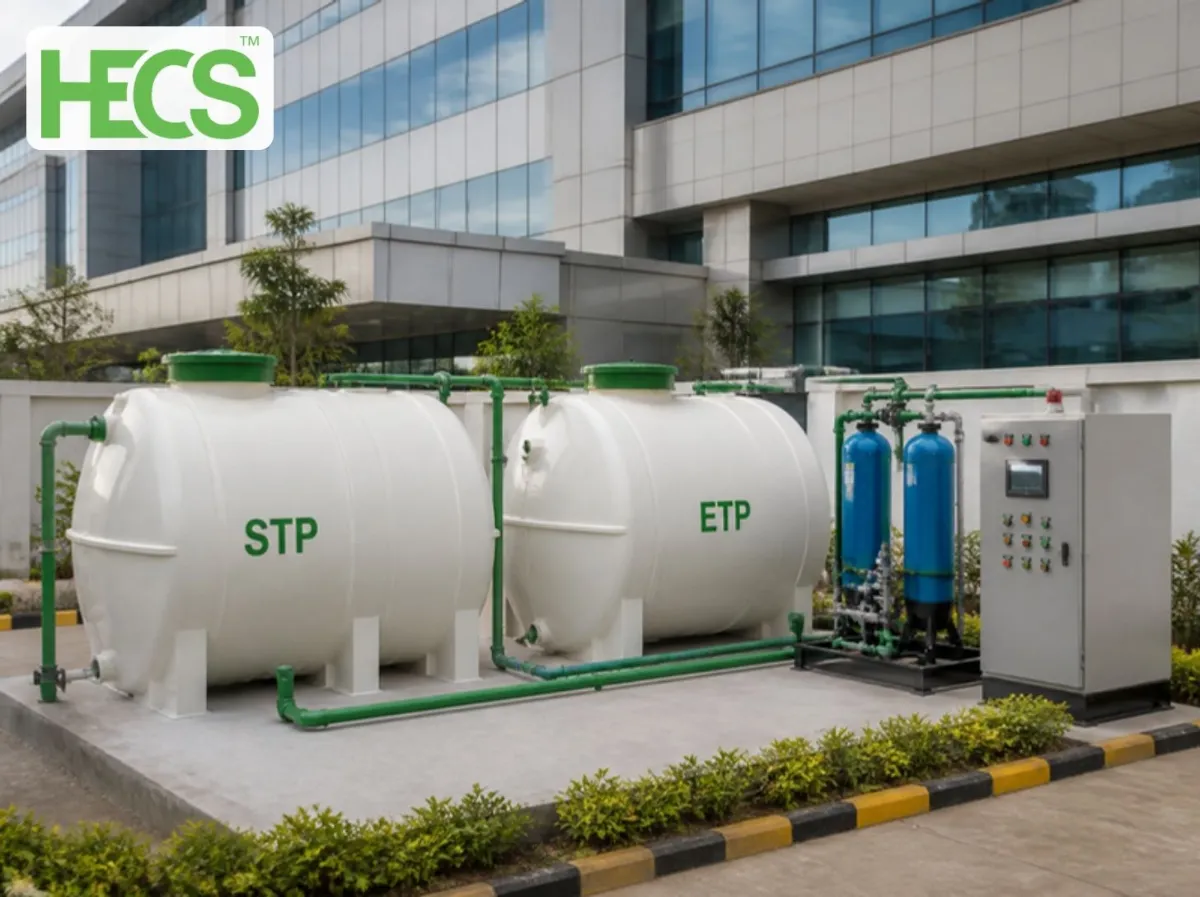
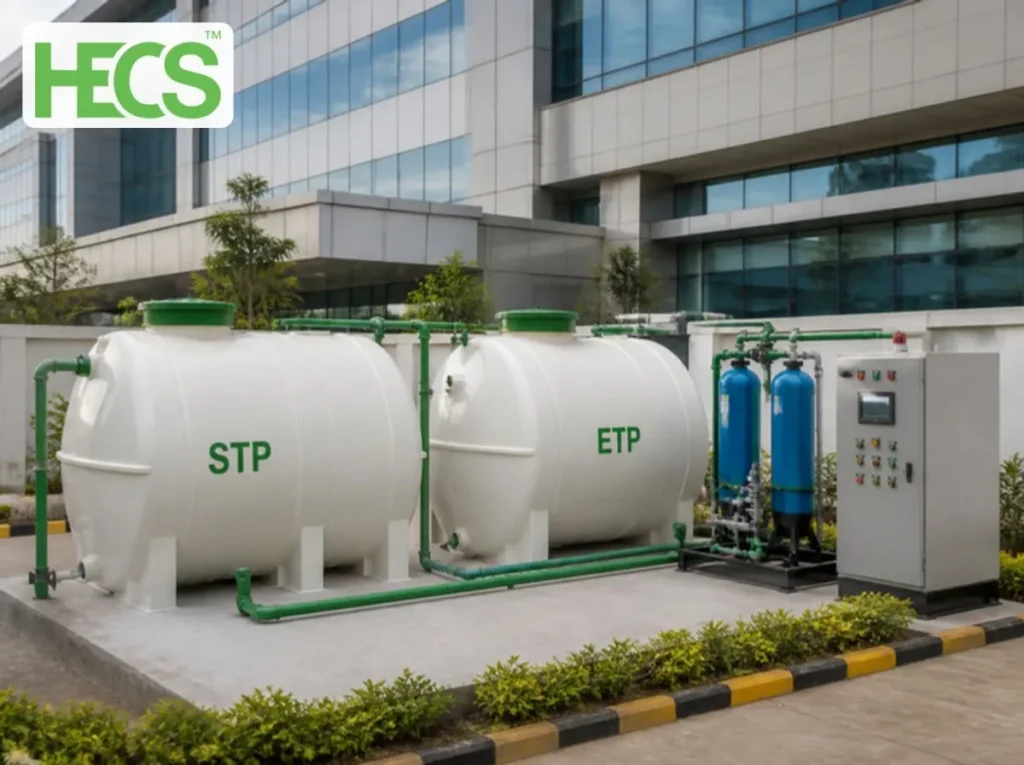
Quick answer: an STP (sewage treatment plant) treats domestic sewage from toilets, kitchens and bathrooms. An ETP (effluent treatment plant) treats industrial or process wastewater, which can carry chemicals, oils, solvents or extreme pH. A CETP (common effluent treatment plant) is a shared ETP for many small industries in a cluster. Many sites need both an STP and an ETP, with the two streams kept separate.
Domestic sewage
Industrial or process effluent
Shared ETP for a cluster
ETP and STP at Global Pharma
STP vs ETP vs CETP at a glance
| Factor | STP | ETP | CETP |
|---|---|---|---|
| Treats | Domestic sewage | Industrial or process effluent | Effluent from many industries in a cluster |
| Typical users | Apartments, hotels, schools, offices, hospitals (sewage) | Factories, pharma, hospitals (lab and laundry), car washes, laundries | Small and medium units in an industrial area |
| Main treatment | Biological (MBBR, MBR, SBR) plus filtration and disinfection | Equalisation, neutralisation, physico-chemical and biological stages, depending on the effluent | Large ETP; members pre-treat to inlet limits |
| Who runs it | Building owner or O&M contractor | The industry or its contractor | A society or company formed by member units |
| Approvals | Consent from the State Pollution Control Board | Consent with limits for the industry | Consent for the CETP; members follow its inlet limits |
When a site needs both an STP and an ETP
- Hospitals: sewage goes to an STP; laboratory, operation theatre and laundry effluent goes to an ETP such as HECS MediClear.
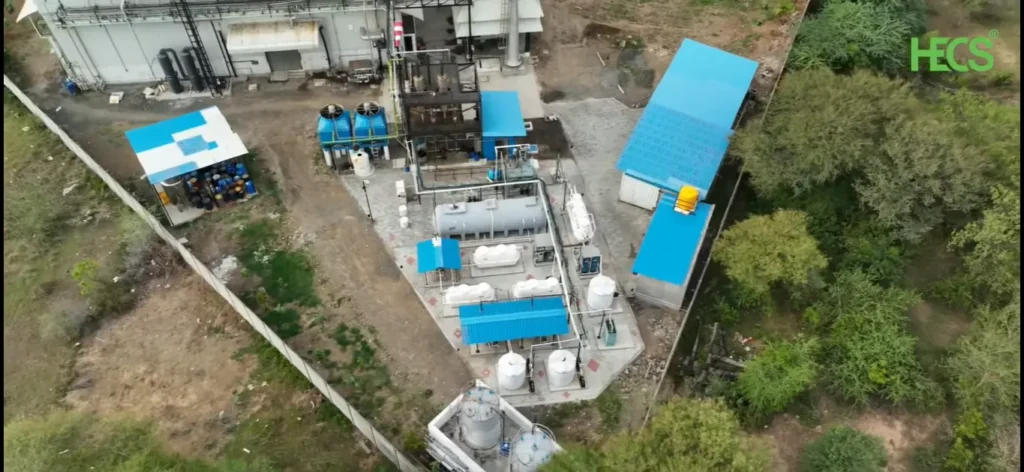
- Pharmaceutical plants: at Global Pharma, HECS supplied a 20 KLD ETP for API process effluent and a separate 6 KLD hybrid MBBR STP for domestic sewage. See pharmaceutical ETP.
- Factories: process effluent to an ETP, staff sewage to an STP.
- Laundries and car washes: dedicated ETPs such as HECS Eco Launder and HECS Eco Wash.
Why not send everything to one plant?
An STP relies on bacteria. Chemicals, solvents, oils, disinfectants and pH swings in process effluent can kill or upset that biology, and some pollutants, such as dissolved salts, pass straight through it. Keeping the streams apart lets each plant be designed for what it actually receives. Where a site wants one discharge point, the effluent is treated in the ETP first.
When a CETP makes sense
- Your unit is in an industrial area served by a CETP, and the CETP accepts your type and volume of effluent.
- You can meet the CETP’s inlet limits, with pre-treatment on site if needed.
- Your consent allows discharge to the CETP.
If there is no CETP, or it cannot take your effluent, you need your own ETP. See ETP plant cost in India and ETP sludge management.

HECS options
- STPs: HECS Ultima (MBBR) and HECS Amaze (MBR), factory-built FRP units for about 1 to 1,000 KLD.
- ETPs: HECS X-Fluent compact ETP, customised packaged ETPs, MediClear, Eco Launder and Eco Wash.
- Monitoring: HECS SmartHub alerts for both.
STP vs ETP vs CETP: FAQs
Can’t find your answer? Ask an HECS engineer. We reply within minutes.
What is the difference between an STP and an ETP?
An STP treats domestic sewage from toilets, kitchens and bathrooms using mainly biological treatment. An ETP treats industrial or process effluent, which can carry chemicals, oils, solvents, colour or extreme pH, so it usually adds chemical and physical stages before or after the biology.
Does a hospital need an ETP?
Hospitals usually need both: an STP for toilet and kitchen sewage, and an ETP for laboratory, operation theatre and laundry effluent, as set out in their consent and the Bio-Medical Waste Management Rules, 2016. See the HECS MediClear hospital ETP.
What is a CETP?
A common effluent treatment plant: a shared ETP that treats effluent from many small and medium industries in an industrial area. Member units pay to connect and must pre-treat their effluent to the CETP’s inlet limits.
Can I send my effluent to a CETP instead of building an ETP?
Only if your unit is in a CETP’s area, the CETP accepts your type and volume of effluent, and your consent allows it. Most members still need some pre-treatment on site.
Can sewage and industrial effluent be treated in one plant?
Usually they are kept separate. Process effluent can upset the bacteria in an STP, so the streams are segregated and the effluent is treated in an ETP first.
Which needs more space, an STP or an ETP?
It depends on volume and the treatment needed. ETPs often need extra tanks for equalisation, neutralisation and chemical treatment. Packaged FRP units reduce the footprint for both.
Not sure which plant your site needs?
Tell us what the site does, the wastewater streams and daily volumes. An HECS engineer will advise. We reply within minutes.